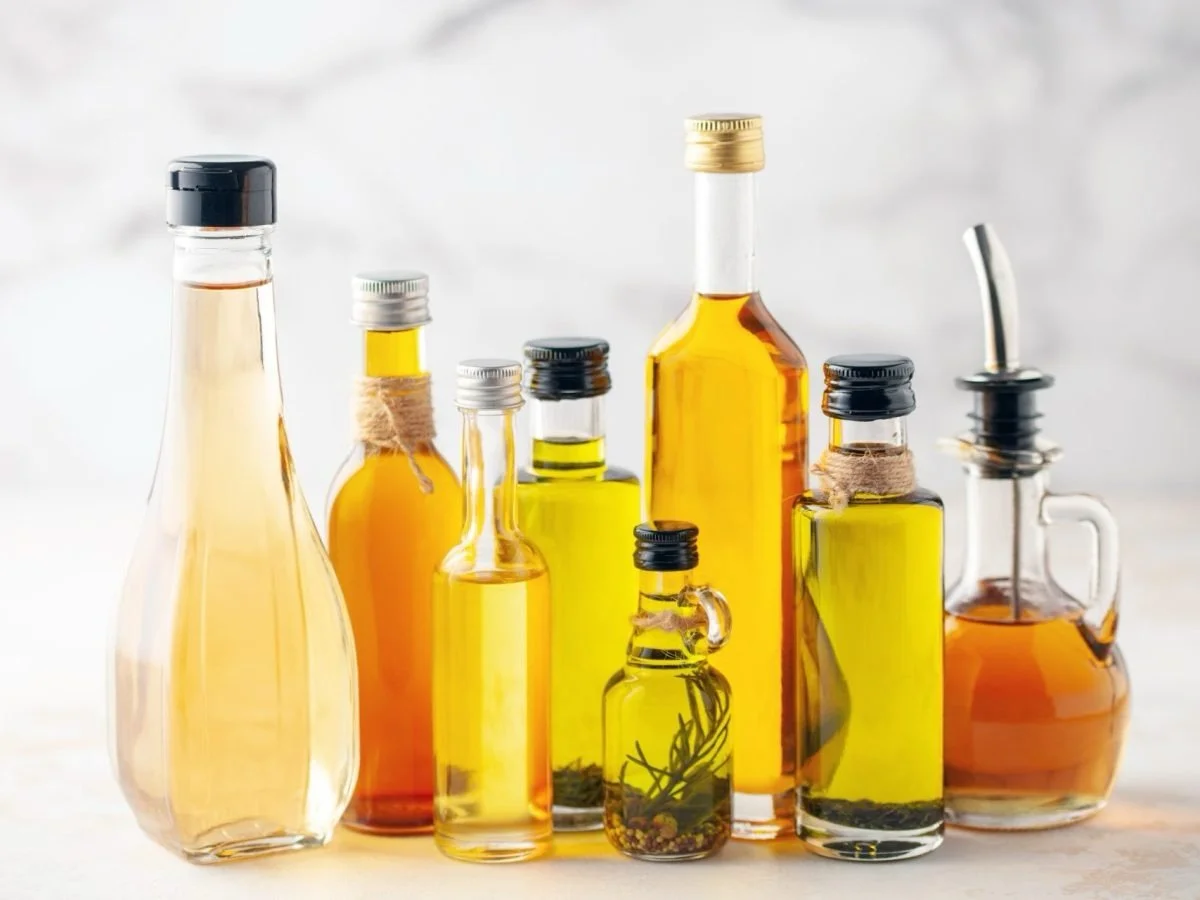
Photo courtesy of American Institute for Cancer Research
Seed oils (soybean, sunflower, corn, grapeseed, rice bran, safflower, flaxseed, sesame, peanut, canola & cottonseed . . . ) are extracted from the fat rich seeds of plants. Even if the plants are inherently organic their ultraprocessed oils are not. Most of the ultra processing is done to make the end product shelf-stable and visually appealing to consumers.
Seed oil, a polyunsaturated fatty acid, is produced using a chemical solvent to extract the oil from the mechanically crushed seeds. The texture of the extracted oil resembles paste requiring a hot soak in liquid hexane, a petroleum based solvent, also a known nuerotoxin, to depaste the oil. Then the oil is heated to around 212°F / 100°C degrees to remove the hexane but traces will remain. According to a 2020 analysis in Food Chemistry the chemical solvents and heat remove up to 90% of natural fat soluble vitamin E and antioxidants. If that was not enough ultraprocessing, the oil is then heated again and bleached to remove impurities. The oxidative degradation of the seed oil begins early turning it rancid requiring deodorizing with sodium hydroxide (alkali), another known carcinogen, to remove odors & flavors. The sodium hydroxide is supposed to be washed out but residue does remain. The extreme temperatures used to process the seed oils transform the polyunsaturated fatty acids in to toxic 4-hydroxynonenal (4-HN); a compound linked to Alzheimers’s disease, cirrhosis of the liver & cardiovascular disease. The repeated extreme processing temperatures oxidizes the seed oil, creating lipid peroxides & aldehydes which promotes chronic inflammation in the Human body. Chemical residues from the hexane, sodium hydroxide and bleaching compounds can accumulate in the Human body to dangerous levels with regular consumption. Besides the industrial chemicals used in ultraprocessing a high quantity of seed oils may come from grains which have a higher propensity to be inherently engineered with chemicals from genetically modified plants. These plants are engineered with a trait that allows the plants to tolerate the herbicide glyphosate (Roundup) allowing Farmers to spray their entire fields with the herbicide to kill weeds & grasses without killing the crop.
Some of the criticisms of seed oils are based on correlation, not causation. Claims of proinflammatory agents like linoleic acid (which converts to arachidonic acids) found in seed oils may only have a 1% to 2% potential conversion rate in Humans. Debates on the health impacts of seed oils, if any, and replacing it with beef tallow is distracting from the real issue of eating too much ultra processed foods like fast food french fries—regardless of which cooking oil is used.
A healthier option is fruit oils (Olive, avocado . . . ) which are mechanically cold processed or expeller pressed; excluding chemical solvents or heating. The mechanical pressure retains more vitamin E and antioxidants than highly processed seed oils. The caveat is mechanical cold processing is not as efficient raising the cost of production.
HISTORY OF SEED OILS
During the industrial revolution the high fat content of whale oil was used to lubricate the machines of industry. By the late 1800s most whales were nearly hunted to extinction. An alternative was found in cotton seed oil. The former seed waste product from the fast fashion cotton industry now became a commodity and has a purpose. In 1911 Proctor & Gamble expanded the uses of seed oils as a lubricant, in the manufacturing of soaps & candles to its zenith as a food product known as Crisco. In most cases, vegetable oil was now able to dethrone animal fats: beef / sheep / bison fat (Tallow / Suet), pork fat (Lard) & butter / ghee (Milk). Tallow / Suet comes from beef, sheep or bison fat & organs that are rendered then filtered and remains as a solid at room temperature. In 1948 Proctor & Gamble was able to influence the fledgling American Heart Association (AHA) with a $1.5 million donation to promote studies on the diet-heart hypothesis linking saturated fat & high cholesterol (LDL) with coronary heart disease. The AHA studies revealed polyunsaturated fat seed oils are a heart healthy alternative over animal fats.
Canola (A contraction of the words Canada and ola, meaning oil) oil is a cultivar geoengineered in the 1970’s by Canadian scientists to repurpose the industrial lubricant rapeseed oil for the consumer market after its’ military industrial uses (locomotives, steam ships . . . ) declined during the end of World War II. Original rapeseed oil is unpalatable & unsafe for Human consumption and is high in the monounsaturated fat erucic acid (Associated with heart lesions in Humans) and glucosinolates (blocks thyroid function in animals). The new geoengineered version of rapeseed oil lowered the bitter erucic acid down to <2%. Like most seed oils, marketed as sustainable and heart healthy, rapeseed oil is highly processed involving the use of petroleum based solvents and extreme temperatures that oxidizes the oil creating harmful trans-fats which decreases healthy HDL fat while increasing Omega-6 fatty acids.
The increased use of seed oils coincided with a shift in the American diet in the 1960’s towards calorie dense ultra-processed foods made almost exclusively using cheap seed oils. The increased consumption of Linoleic Acid (Pro-inflammatory Omega-6 fatty acid, not to be confused with minimally inflammatory Omega-3 fatty acid) found in seed oils promotes chronic inflammation linked to obesity, arthritis, diabetes, arthritis and including coronary heart disease . . . ) ultra-processed foods increased the exposure of Linoleic Acid beyond what the Human body evolved to metabolize from foraging wild ruderal grain plants. Early Humans only had access to moderate amounts of “seasonal” seeds compared to the overwhelming incorporation of seed oils found in most modern ultra-processed and packaged foods.
Please share your viewpoints or experiences in the Comments section below.