THE SUNSET OF FOSSIL FUELS
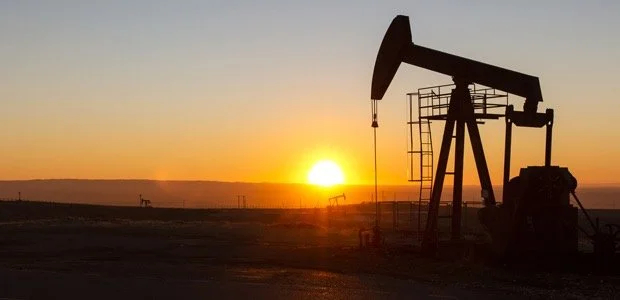
Photo courtesy of American Oil & Gas Reporter
Since the Industrial Revolution, Humanity has associated the generation of heat and kinetic energy generation with the combustion of carbon based fuels. In the Post Industrial Revolution, Humanity is now associating energy generation with clean renewable energy. With the exception of nuclear fission energy, the combustion of wood, coal, oil and natural gas; all produce harmful carbon dioxide (CO₂) emissions. In contrast, photovoltaic (PV) electrical generation does not require combustion, no byproduct of heat, no noise, no smoke and most importantly no CO₂ emissions. There are no moving parts on a solar panel that requires maintenance. Photons from sunlight strike PV cells where they excite electrons producing electricity.
According to the U.S. Energy Information Administration (EIA) in year 2025 global oil consumption declined by 20%; with an oversupply as production consistently outpaced demand, leading to a decline in gas prices. While the International Energy Agency, 2026 forecast, global oil supplies are expected to exceed demand by 400 million barrels a day.
Why the decline in global oil consumption ?
More economical renewable energy is to blame. The global increase in demand for electric vehicles (EV's) and energy efficient induction home heating & cooking further exasperate the decrease in demand for fossil fuels. At the time of this writing, electricity generated by “unsubsidized” renewable energy, in the forms of solar, wind turbines & geothermal energy with lithium iron phosphate (LiFePO4 or LFP) or solid state battery storage, are the “lowest cost” and “fastest to scale” forms of energy generation & storage; compared to the exploration, extraction, processing, transportation, refining & distribution of the incumbent carbon based fossil fuels (oil, coal and natural gas); including nuclear fission energy. Even geothermal energy is cheaper since the technology benefited from existing oil and fracking technology.
An economic system that depends on constant economic growth for investors is not designed to appreciate the energy independence that the renewable energy generation of electricity with battery storage can provide consumers.
No one owns the sun !
No one owns the wind !
The return-on-investment on renewable energy production is near-term immediately after the cost of procurement & installation are fulfilled. Fossil fuels are single-use only; while renewable energy is replenished daily.
Natural gas (NG) is marketed as a cleaner bridge fuel alternative since the gas collected from burning NG emits half the carbon dioxide generated by burning coal; per unit of energy. However, the fossil fuel corporations does not see NG as a transition fuel, but as a final term asset that is a byproduct of a declining oil industry.
Methane (CH4), the primary component of NG; makes up to 97% of NG and is a more potent green house gas (GHG) than CO₂. Methane has approximately 86 times greater warming potential than CO₂ over a 20 year timespan. The negative health impacts caused by carbon based fuels combustion have been well researched and documented in medical journals; it contributes to respiratory illness such as asthma, chronic lung disease, heart attacks, premature deaths and harm prenatal health. The fine particulate matter found in airborne pollution are small enough to penetrate the lining of the lungs and enter the blood stream. It has been reported “that incidental releases or “leaks” of methane from the extraction, production and transportation of NG greatly reduce or even eliminate the climate benefits of NG.” During the extraction of NG, excess methane is often burned off and seen in familiar images of gas flames on top of flare-towers in fields of NG wells. According to the U.S. Environmental Protection Agency (EPA) it estimates that in 2021 the release of methane from NG production, along with abandoned crude oil and NG wells were the sources of 33% of the total U.S. methane emissions.
In the U.S. from 1998 - 2017, 15 people per year, on average, died due to NG distribution explosions; possibly, from faulty high pressure corroded pipeline valves or operator errors.
The economic inviability of NG is due to how incredibly expensive operational cost are and if not for U.S. government intervention in the forms of tax breaks and subsidies for oil producing corporations, fuel prices would be astronomically higher for the average American consumer. A traditional crude oil well keeps flowing after the initial drilling with an incremental decline in production (Terminal production decline). In contrast, a NG well literally explodes with an initial flow that rapidly declines—like an opened champagne bottle. Most NG wells loose up to 70% production after their first year requiring the constant drilling of new wells to maintain profitable production levels. (2021 PennState study in the Bakken shale fields).
NG and crude oil are not infinite natural resources, their ancient development are dependent on a geologic time clock with a timeline that spans over millions of years. Shale oil wells have faster depletion rates with a less energy dense chemistry. The majority of U.S. oil refinery cookers (ExxonMobil in Bayton, TX, Valero in Port Arthur, TX & Marathon in Garyville, LA) can not refine the preferred lite (Sweet) low sulfur oil (Like the crude oil extracted from Middle East producers) because U.S. refineries were historically constructed to refine domestic pre-shale sour crude oil, Canadian & Venezuelan Orinoco Oil Belt heavy (Sour) high sulfur oil. The low American Petroleum Institute (API) gravity of this dense, viscous, sour oil makes it more expensive to extract, refine and transport. It takes large investments & decades to design and construct a new oil refinary. When compared to traditional oil wells, modern shale oil extraction requires greater investments because the extractions are from deeper wells compared to older wells that were more accessible & shallow—thus more economical to operate. Modern technology has also enabled oil extraction from riskier environments like deep sea oil rigs; but with commensurate risk to workers lives, ocean life / environment and higher operational expenses.
The Permian Basin, of western Texas & eastern New Mexico, the U.S. top oil oilfield, along the Williston Basinswith Basin are the new areas of interest for U.S. NG production. However, the Bakken NG fields, in the Williston Basin, have the fastest depletion rate of 1.54 million barrels per day in 2020 pre pandemic to 1.3 million b/d in 2023. While the Permian Basin oil fields are expected to max out economical efficiency of production around 2030.
The inevitable decline of U.S. oil production will have major implications on society since fossil fuels currently power society. The production rate of existing U.S. conventional oil wells and fields are diminishing at a rate of 6% per year. This exponential rate of decline is exasperated with the knowledge that “less than 60% of U.S. crude oil production is actually oil. The rest is non-petroleum and comes from NG, plants & refinery gain which are growing faster than crude oil extraction. (EIA STEO & Labyrinth Consulting Services, Inc 2022). So the main product is actually not the desired crude oil but a component of NG called Ethane (C2H6) at 55% which is primarily used in the petrochemical industry as a precursor of Ethylene in the production of single-use food plastic containers. With decreasing oil production and the diminishing role of oil in transportation and home heating due to electric vehicles (EVs) and heat pumps; respectively, oil corporations have to a find a new purpose for oil in the forms of single-use plastics for food packaging and in the fast fashion idustry.
For further information please read “FAST FASHION VS SUSTAINABLE FASHION”
NG is a fossil fuel commodity sold in its natural form as a compressed gas that can be pumped through pipes. When temperatures are lowered to -260 °F by a liquefaction process the gas is turned into a liquid (LNG) for an economical transport by tanker ships—called Very Large Gas Carriers (VLGC)—since LNG is more energy dense per cubic volume when shrunk compared to NG. Regasification infrastructure on the receiving import side reverts the LNG to processed NG for transport through pipes. The technological boom of fracking has given the threat of “Peak oil” a slight; albeit temporary, reprieve. In the early 2000s, NG production exceeded U.S. domestic needs to the point the U.S. became the largest NG exporter.
Peak oil is the maximum rate of consumption of hydrocarbon followed by a rapid decline leading to an inevitable terminal end. The concern of Peak oil became a reality in the 1970’s with a rapid decline in output from conventional—easy to access—oil wells. This came at a time when there were no viable economical energy substitutes; with renewable energy technology in its infancy. Subsequent rising oil prices, due to geopolitics in the Middle East, was the catalyst for an innovative technique in the 1980’s & 1990’s to exploit the latent NG trapped in deep impervious rock formations known as shale rock or reservoir rock. NG was once considered a nuisance byproduct of the lucrative shale oil extraction; often dispensed with by burning the gas through flares. Advances in horizontal drilling and hydraulic fracturing (Fracking) technology have both greatly facilitated the exploitation of these once latent NG fields. Vertical drills capable of angling 90° (Kick-off) horizontally to maximize the horizontal width of the deposits of natural gas trapped within the rock formations. Perforations 30” long and 1/3 in diameter are blasted through the casing tunnel in to the rock formation. Then a solution of high pressure water, chemicals & sand are injected to expand the fractures 200’ to 300’ further making the rock formations more permeable; sucking the trapped NG up the vertical tunnel. The solution is composed of 90% water with additives of gel, foam or proppants: resin or sand. Pumps then extract the liquid solution containing NG.
Fracking has been known to cause seismic activity, allowing Methane to contaminate wells & natural aquifers. Also, failing storage tanks that hold used fracking solutions have also been known to seep in to aquifers.
The 1973 and 1979 oil crisis disrupted global oil supplies leading to higher gas prices, gasoline rationing, higher inflation and stagflation. In October 1973 Arab members of the Organization of Arab Petroleum Exporting Countries (OAPEC) imposed an embargo on oil shipments to the U.S., Japan and Western European nations whom supported Isreal during the Yom Kippur War against Egypt and Syria. This caused the worst economic decline since the Great Depression. Then the 1979 Iranian Revolution caused a drastic decline in Iranian oil production with subsequent global speculative hoarding further reducing global oil supply. The oil crises influenced U.S. auto consumers to favor Western European and primarily Japanese (Toyota, Datsun & Honda) imports of smaller fuel-efficient automobiles instead of domestically produced larger gas guzzlers with less fuel economy.
These events were also the catalyst for nations to invest in nuclear energy and pursue research in solar photovoltaics and other renewable energy technology; along with battery storage technology. The motivation was not environmental altruism but economic security. However, an unintended consequence that emerged from the renewable energy technological advances was the democratization of energy production which put some consumers in control of their own electrical energy production and storage. The notion of U.S. oil independence has not been practical since U.S. oil refineries can not even take advantage of the domestic sweet shale oil because U.S. refinery cookers were historically designed to refine the heavy sour crude oil from Mexico, Canada and Venezuela. It has been more economical to purchase and ship (See The Jones Act) refined Middle East oil on to U.S. shores than encourage U.S. refiners to make huge investments in new domestic refineries capable of refining lighter sweet shale oil as they watch the global demand for carbon based fuels decline.
It is reasonable to believe that as petro-nations inevitably transition the majority of their electrical generation to domestic renewable energy sources it will have the potential to diminish; atleast one major catalyst for imperialist foreign wars—the weaponization of oil. This is exemplified by the 2026 U.S. Israeli & Iranian war in the maritime chokepoint of the Strait of Hormuz which has throttled 20% of the worlds’ oil transported through the conduit causing supply disruptions; along with damages from attacks to Gulf oil, NG & petrochemicals (Helium) manufacturing infrastructure. Analyst from the insurance & financial industries have estimated that repairs to Qatars’ Ras Laffan—the worlds’ largest LNG export plant—infrastructure from damages sustained from Iranian drone attacks would take more than five years to return to pre-war production levels. Like the 1973 & 1979 Middle East oil crisis, rising gasoline & diesel prices and the anxiety of oil & NG supply vulnerability has influenced a growing number of global consumers to—strategically—favor renewable energy and electric vehicle (EV’s).
Domestically produced renewable energy has resilience to these types of global oil crisis. The energy transition (Peak oil) will not occur because of mass environmental altruism or fossil fuel scarcity; in response to the latter, oil corporations will create even more innovative—albeit expensive—ways, including Artificial Intelligence (AI), for crude oil & NG exploration & extraction. But as the operational cost of these new innovative ways of doing business negatively impacts the profits of oil corporations, investors will transition to more economical ways of energy generation. Also, financially savvy consumers will invest more in affordable reliable residential renewable energy, like rooftop solar photovoltaic & wind turbine with lithium or solid state battery storage, along with geothermal heat pumps, as ways to democratize energy generation; if not for environmental reasons, definitely to save money and / or to offer resilience against climate related extreme weather events.
Please share your thoughts or experiences in the Comments section below.