TINY OFF-GRID HOUSE LAND
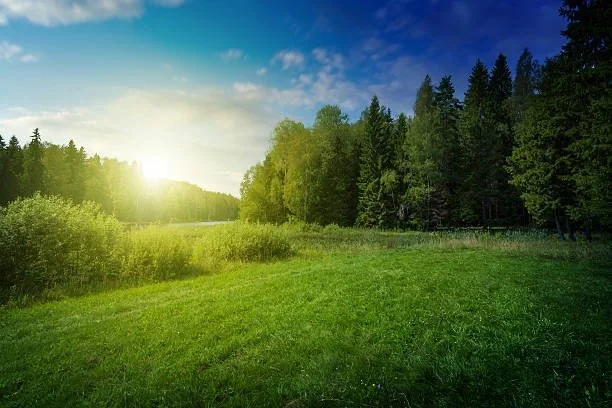
Image courtesy of iStock
The Tiny Off-Grid House is designed to have a relationship with the land in 4 season climates on off-grid land or on a water barge anchored to a pier. The sustainable design enables the occupants to be intimately aware of how their daily life style and consumer choices impacts their natural environment. Unless desired, no physical connection to the electrical grid or municipal waste pipes are required. If your intentions is to purchase land or temporarily reside on leased or rented land the Tiny Off-Grid House will not impose on the existing utility infrastructure for its operational needs.
The rooftop mounted solar array is robust enough to provide > 20.0 Kwh of energy daily for all the electrical power needs of the Tiny Off-Grid House. Micro wind turbine and hydro energies can be supplemented to the primary PV system. Electricity is stored in a 28.8 Kwh lithium battery bank for distribution to the electrical appliances. If there is an abundance of PV electricity produced the Tiny Off-Grid House has the ability to provide level 2 charging to an electric vehicle or 120 / 240 Volts AC, to a separate structure.
A composting toilet operates independently from the municipal waste or on-site septic system. Dehydrated solid waste is collected in biodegradible bags, inside the composting toilet, for disposal in to regular trash. The same way diapers are disposed in regular trash. Urine and dish water can be collected in to the grey water tank under the Tiny Off-Grid House trailer for disposal or added to composting in a nonedible garden. Biodegradable soaps and toiletries should be used to facilitate any outside composting on the property and not change the natural chemistry of the land.
Depending on the potential for precipitation in the region, a rainwater catchment system can enable the use of rainwater for domestic water needs. The filtered rain water is stored in a 55 gallons food grade container. For more information please read “Off-Grid Clean Water Holding Tank”
Post World War II residential zoning laws cater to the ideal of the car centric nuclear family; owning a large home with a green front lawn. Most zoning laws ban multi family dwellings or even an accessory dwelling unit (aka Granny flats) on the property; along with facilitating racial and class segregation in “Red Lined” neighborhoods. Some homeowners, home owners associations (HOA) and local governments would not support, or protest, the introduction of multi family or community projects that may negatively impact their property values.
If your goal is to own land to permanently park your Tiny Off-Grid House then there are some considerations; in no order of importance:
Never purchase land site-unseen or exclusively through online marketing photos.
Tour the property on foot in various seasons before purchase. Viewing the raw land in the winter may also reveal a lot more since the leaves will be off the trees increasing visibility.
Hire a licensed surveyor to assess property line (boundary)
Land with a purpose. If the land is intended for farming the amount of “usable” land is important. Rocky land or land on the side of a steep hill may not be suitable for farming. Land intended for a house may not be feasible if the land can not accommodate a septic system
Perform a septic system soil percolation test to see how easily water drains in to the ground
Locate off-grid land through the use of a “land” realtor, Craigs List, Zillow, Land.com
Assess for demolition / disposal of preexisting structures or garbage on the land.
Land used as a dumpsite by the municipality or the community may have costly unseen environmental pollution underground
Check with state, city, town, county, parish or local authority for zoning (Commercial, residential, landmark status) & building codes for their legal definition of a dwelling. Land designated as unrestricted may still have a minimum dwelling size. In 2016, Tiny Houses on a foundation, 400 square feet or less, were approved for inclusion in Appendix Q of the International Residential Code (2016 IRC). Also, water permits / access to land next to sea, lake, rivers, piers or designated wetlands may be restricted and under the authority of the U.S. Army Corps of Engineers
Perform title research of land deed—fraud—liens or back taxes. Research deed restrictions, which tells you what you can do and cannot do to your property
Access to clean drinking water. Water is too vital for our existence to depend exclusively on one source. A supplemental source should be established by municipal pipes, lake, river rain water catchment or well water. If performing the latter, ask regional well diggers for the average cost per depth, in feet, and success rate for your ZIP code. Also, research well logs from the county or state ground water data base. Water data for the nation can be accessed on the U.S. Geological Survey website waterdata.usgs.gov . It is recommended to test existing well water for signs of caffeine since it is so ubiquitous in our society that its’ presence in well water may indicate contamination from a nearby septic system or waste water discharge overflow.
Possession of air rights, water and mineral rights. A fracking company may have legal rights to have their horizontal drilling encroach under your land to extract natural gas. A timber company may have rights to cut the trees on your land
Obtain the most updated property line land survey registered with the municipal authority
Check for encroachments such as a fence, wall or a building
Check for easements, aka servitude, (A right to use a part of someone else land for a specific purpose such as a right-of-way, utility pole, water dock, communications tower, airport signal lights)
For a mobile home / RV to be considered real property (Attached to the land) the DMV title (Personal property) may need to be canceled
Check for encumbrance (Land use by non-property owner). Your property maybe surrounded by private land with an encumbrance for your private road access
Proximity to utility power lines, cell towers, municipal water / sewage pipes and their capacity
Proximity to nuisances like a noisy highway or factory
Access to municipal services such as fire department, ambulance, police, public road clearing of snow, residential trash removal, public tree removal. . .
Property tax—enough said
An existing neighbor / family dispute with the prior land owner may be inherited if the underlining issue(s), especially if legal, was never resolved
Assess topography / slope for roads, farming, tree orchard or for grazing. If the slope is too steep, it will increase expenses to level the ground for farming, a foundation or driveway
Assess soil & water chemistry for pollutants
Proximity to essential services: hospital, fire department, fire hydrant, police station, post office (Mail box), library, grocery store . . .
Research history of the land in municipal records, local library, historical society, online & local newspapers
Property liability insurance protects your investment from unintended consequences NOTE: Increasing environmental risks like floods from hurricanes, tornadoes along with forest fires have led to increased insurance premiums for a large number of traditional home owners. The increases not only impact local residents living in high risk regions but also the majority of insurance holders. Some insurance companies have even abandoned certain high risk markets, like some areas in the U.S. state of Florida, prone to climate change related extreme weather events. Subsequently, some banks have refused to issue mortgages to homeowners whom cannot afford the higher home owners insurance. Also, adjustments to coverage policies have been made to mitigate revenue losses for the insurance industry while imposing more out-of-pocket expenses on to the homeowners. The science of Catastrophe Risk Modeling is utilized by the insurance industry & investors to identify patterns in climate related financial risk investments in: agriculture, housing, energy production . . . However, the intentions of the science is not altruistic or to find sustainable solutions to mitigate the impacts of extreme weather events, but to protect investments or to capitalize from extreme weather related catastrophes.
Posting of No Trespassing signs & security fencing
Maintain land conservation for migratory animals
Community. Ask your neighbors about the area and why would it be good to live there ?
The land should be hospitable to an animal companion
Clear access to the southern sky for solar array; a clear tree canopy for rain water catchment and satellite communications
Research for natural swales in monsoon season and flood zones (The FEMA Flood Map Service Center). Climate resiliency is important as global warming increases the propensity for wildfire risk & floods. A designated Fire Hazard Security Zone may encumber obtaining property insurance. For more information please read “Living In A World Of Extreme Weather Events”
State or local regulatory authorities may prevent exhuming an existing deceased human burial site found on the land
If the conventionally farmed land is intended for organic farming the land should remain fallow for a 3 year transition period also barring the use of prohibited substances
Perform your due diligence
Please share your thoughts or experiences in the Comments section below.