TINY OFF-GRID HOUSE MINIMALISM
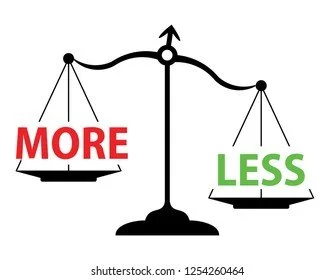
Image courtesy of Shutterstock
“Your house is just a place for your stuff . . . that’s all your house is a pile of stuff with a cover on it . . . and when you leave your stuff you gotta lock it up, wouldn’t want someone to come by and take some of your stuff” George Carlin - Comedian, Social Critic, Disc Jockey, Actor, and Author
The Tiny Off-Grid House Research is not solely focused on the use of, non-carbon, renewable energy sources to generate electrical power for the Tiny Off-Grid House. The research also involves the social and mental health impacts of living a sustainable lifestyle; with less emphasis on overconsumption of consumer products and abstaining from non-sustainable practices that are embedded in our consumer culture. These values can be summed up in the “MISSION STATEMENT” of the Tiny Off-Grid House Research which should negate any perceptions that the advantages of Minimalism for a Tiny Off-Grid House living are solely motivated by the space constraints of the dwelling; if any.
One of the most concise & sharpest definition of Minimalism is “at its core, minimalism is being intentional with the way you live your life. Only allowing what aligns with your most important values to take up your space and your time” Simple Lionheart Life.
After our basic human needs are met, over consumption only serves to further the depletion of the Earths’ natural resources, increase labor, elevate CO₂ emissions and further expand the generation of waste; all feeding climate change. A 2015 study found that the production and use of household goods were responsible for 60% of global greenhouse gas emissions.
Corporations pay advertising companies, along with the emergence of social media influencers, to influence the consumerist culture on what they can become through the possession of certain products; imposing manufactured desires and needs on to consumers.
Even if consumer products are sustainably made this is not a solution because the production of consumer products always involves some form of environmental impact. In order to limit global warming increase to the 34.7°F / 1.5°C threshold above preindustrial temperatures (Set by The Paris Agreement which is a legally binding international climate change treaty adopted by 195 Parties at the UN Climate Change Conference in Paris, France, on December 12, 2015 and entered in to force on November 4, 2016) we have to reduce our current level of over consumption. Even at current elevated temperature levels extreme weather caused by climate change are having devastating impacts to our Earth; increasing temperatures can be cataclysmic. Although a dozen or more industrial corporations are responsible for the majority of global greenhouse gas emissions through their extraction & refining of fossil fuels; along with their processes that transform raw materials in to consumer products, this does not absolve individuals from taking any personal responsibility and progressive actions. Only by ultimately reducing consumer consumption can individuals’ environmental impact be lowered.
PRO’S OF MINIMALISM
MENTAL HEALTH BENEFITS (LESS STRESS): Studies have shown living a sustainable lifestyle reduces stress, enhances cognitive function and increase overall well being.
MORE TIME, INCREASED PRODUCTIVITY: Research has shown a cluttered home causes disorganization and subsequent distractions. Less material possessions decreases the time needed to clean a house. Items become organized and easier to find increasing efficiency.
GREATER APPRECIATION FOR WHAT MATTERS: As we scrutinize the materials possessions we allow in to our homes this will make a quantitative change. While qualitative changes will emerge as consumers make conscious choices when acquiring products; with an emphasis on personal needs, not emotional wants.
MORE SPACE, LESS CLUTTER: Avoiding the accumulation of possessions creates more free living space. The Tiny Off-Grid House design facilitates minimalism by providing an efficient use of living space; avoiding excess storage spaces that can become bloated with the accumulation of possessions.
FINANCIAL BENEFITS: Minimalism frees the individual from having to work harder to earn more money to purchase more-and-more possessions. A greater part of the finances can go instead towards self improvement, education and enjoying experiences.
MORE FREEDOM: Separating oneself from the shackles of overconsumption represents true consumer freedom to live ones life not defined by the material possessions they own.
CON’S OF MINIMALISM
It may not be easy to escape social, cultural or religious customs concerning gifts; especially when it involves children. If someone has a minimalist perception when it comes to owning material possessions their values may transcend to their practice of giving and receiving gifts.
Those with limited financial resources may feel the need to hold on to stuff in the hope of saving money if the item is needed in the near future.
Ironically, the journey to minimalism can come with some stress. Decluttering possessions that may possess some form of emotional attachment can generate anxiety.
Although a dozen or more multi national corporations are responsible for the majority of global greenhouse gas emissions through their extraction, refining & transport of fossil fuels; along with their processes that transform raw materials in to consumer products, this does not absolve individuals from taking any personal responsibility and progressive actions. Only by ultimately reducing consumer consumption can individuals’ environmental impact be lowered. Consumers can take progressive action through the consumer choices they make in their daily lives by practicing, but not limited to, conservation, recycling and intentional purchases—Refrain from buying products impulsively, irresponsibly or for status and without a purpose—; our behavior and the possessions we choose to live with should align with our personal sustainable values.
Please share your thoughts or experiences in the Comments section below.